
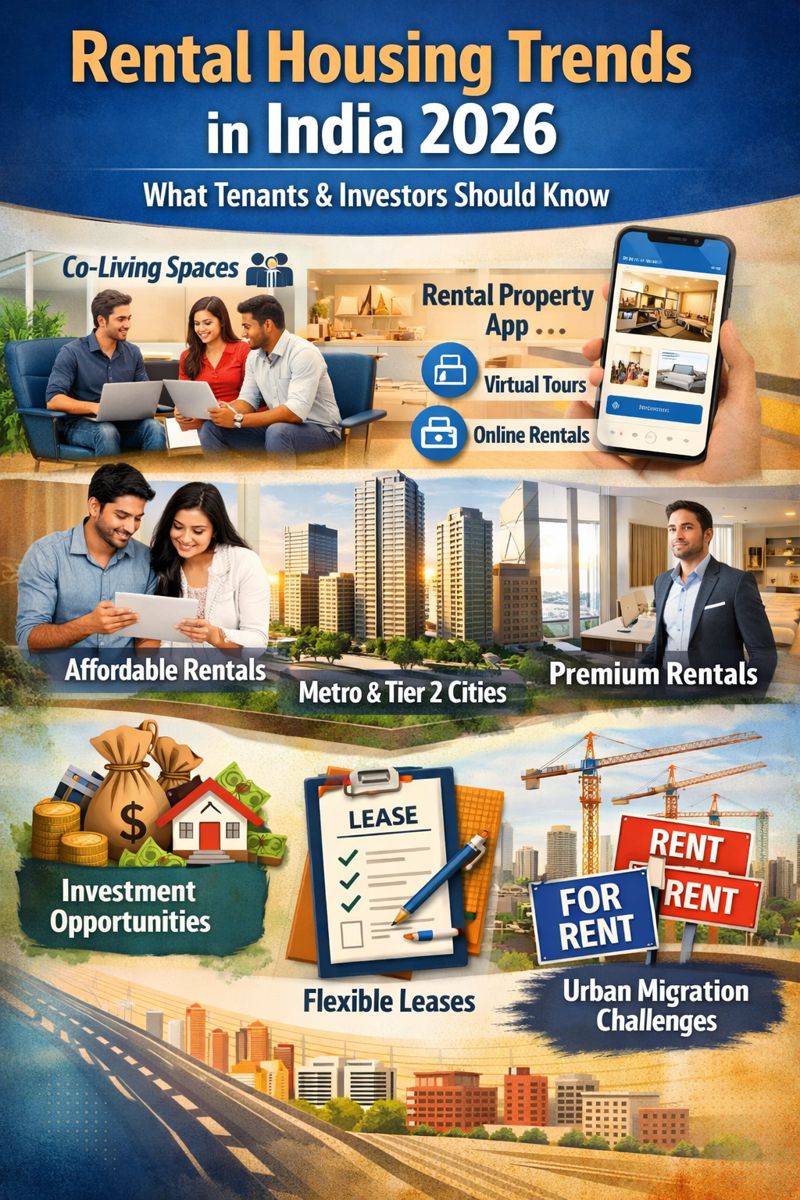
Rental Housing Trends in India 2026: What Tenants & Investors Should Know
Introduction: Renting in India Is No Longer a Temporary Choice
The way Indians rent homes is changing fast. A few years ago, renting was mostly seen as a short-term arrangement before buying a house. In 2026, that thinking has completely shifted. For many people today, renting is a deliberate lifestyle decision, not a compromise.
Rapid urban migration, rising property prices, flexible work culture, and better digital platforms are reshaping the rental housing market in India. From metro cities to emerging Tier-2 locations, demand for quality rental homes is growing faster than ever.
This article explores the future of rental housing in India, the key trends shaping the market, major challenges, and the opportunities waiting for tenants, investors, and developers.
How the Rental Market in India Is Evolving
India’s rental housing sector is becoming more structured and professional. Young professionals, students, freelancers, and even families are choosing rentals for flexibility, convenience, and financial freedom.
Metro cities like Delhi NCR, Bengaluru, Hyderabad, Pune, and Chennai continue to dominate rental demand due to employment opportunities. At the same time, Tier-2 cities such as Indore, Jaipur, Coimbatore, and Ahmedabad are emerging as strong rental markets because of expanding industries and educational hubs.
This shift has turned urban rental housing in India into a core pillar of city living rather than a temporary solution.
Key Rental Housing Trends in India 2026
1. Flexible Rental Agreements Are in High Demand
Long lock-in periods are slowly disappearing. Today’s tenants prefer flexible rental agreements that allow them to move easily for jobs, education, or personal reasons.
Short-term leases, notice-period flexibility, and managed rental housing options are becoming popular, especially among working professionals and students.
2. Growth of Co-Living Spaces in India
One of the biggest rental housing trends in India is the rise of co-living spaces. These shared accommodations offer furnished rooms, common areas, housekeeping, Wi-Fi, and security — all under one roof.
Co-living works well for:
- Young professionals
- Students
- People relocating to new cities
It bridges the gap between affordability and comfort, making it a preferred option in metro cities and IT hubs.
3. Affordable Rental Housing Is a Priority
With property prices increasing across cities, affordable rental housing in India is more important than ever. Compact apartments, shared flats, and budget rental homes are seeing strong demand.
Developers are now focusing on:
- Smaller unit sizes
- Well-connected locations
- Basic but modern amenities
This trend is especially strong in cities with high migration and student populations.
4. Technology Is Transforming the Rental Experience
The rental process has become faster and more transparent thanks to technology. Online rental platforms in India allow tenants to search properties, compare rents, take virtual tours, and complete documentation digitally.
For landlords, tech tools help manage listings, tenants, rent collection, and maintenance. This digital shift has reduced dependency on brokers and improved trust in the rental property market in India.
5. Premium Rental Housing Is Expanding
Not all renters are looking for budget homes. There is a growing demand for premium rental housing in India, especially among senior professionals, expatriates, and corporate employees.
These tenants look for:
- Furnished rental homes
- Security and gated communities
- Proximity to workplaces
- Power backup and parking
Premium rentals offer higher returns and are becoming an attractive segment for investors.
Rental Housing in Tier-2 Cities: The Next Growth Engine
Tier-2 cities are playing a major role in shaping the future of rental housing in India. Lower property costs, improved infrastructure, and increasing job opportunities are attracting migrants to these cities.
Rental housing in Tier-2 cities offers:
- Better affordability
- Higher rental yield potential
- Lower investment risk
For developers and investors, these cities represent long-term growth opportunities.
Challenges in the Indian Rental Housing Sector
Despite strong demand, the rental market faces several challenges:
- Regulatory gaps: Rental laws vary by state, creating confusion for tenants and landlords
- Limited quality supply: Demand often exceeds availability in high-growth areas
- Urban infrastructure issues: Connectivity and public transport still lag in some zones
- High brokerage fees: This affects affordability and transparency
Addressing these challenges is essential for sustainable growth of the Indian rental housing sector.
Opportunities for Investors and Developers
The rental market in India presents multiple opportunities:
Build-to-Rent Projects
Purpose-built rental communities designed specifically for tenants are gaining popularity. These projects offer managed services and consistent rental income.
Student Rental Housing
Cities with universities and colleges are witnessing rising demand for student rental housing in India, including hostels and shared accommodations.
Co-Living Investments
Managed co-living spaces provide scalable returns and cater to a growing urban population.
Emerging Rental Markets
Investing in emerging rental markets in India, especially Tier-2 cities, offers strong ROI potential over the long term.
Role of Rental Housing in Urban Development
Rental housing supports workforce mobility and balanced city growth. Well-planned rental ecosystems reduce pressure on home ownership, improve infrastructure usage, and support sustainable urban expansion.
Cities that focus on rental housing tend to develop better transport networks, smarter planning, and more inclusive communities.
What the Future Holds for Rental Housing in India
By 2026 and beyond, rental housing in India will become:
- More professional and regulated
- Strongly driven by technology
- Focused on tenant experience
- Integrated with smart city planning
Renting will continue to evolve as a lifestyle-centric and financially smart option.
Final Thoughts
The Indian rental housing market is entering a defining phase. Urban migration, lifestyle changes, and digital adoption are reshaping how people live in cities. While challenges remain, the demand for flexible, affordable, and premium rental homes continues to rise.
For tenants, renting offers freedom and convenience. For investors and developers, it represents one of the strongest opportunities in India’s urban real estate future.
FAQ
What are the major rental housing trends in India 2026?
Flexible leases, co-living spaces, affordable rentals, premium housing, and technology-driven platforms are the key trends.
Is rental housing a good investment in India?
Yes, especially in build-to-rent projects, co-living spaces, student housing, and Tier-2 cities.
How is technology impacting rental housing in India?
Technology is simplifying property searches, virtual tours, rent payments, and lease management.
Which cities have the highest rental demand in India?
Metro cities like Delhi NCR, Bengaluru, and Pune lead demand, followed by fast-growing Tier-2 cities.